SS667 - Code of practice for the handling, storage, and processing of combustible dust.
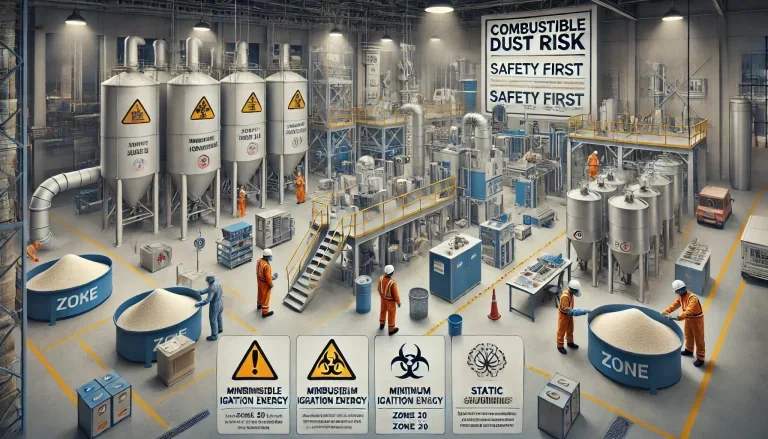
SS667 – Combustible Dust Safety in Singapore
SS667:2020 is Singapore’s code of practice for the handling, storage, and processing of combustible dust. It provides guidance to prevent and mitigate fire and explosion risks in facilities where fine particulate materials are present.
Combustible dust may appear harmless in solid form, but when dispersed in air under the right conditions, it can ignite rapidly and lead to flash fires or explosions with severe consequences.
This standard outlines how industrial facilities should identify hazards, design systems, and implement controls to manage these risks effectively.
Who SS667 Applies To
SS667 is relevant across a wide range of industries where dust is generated, processed, or handled.
This includes:
Manufacturing and general processing industries
Pharmaceutical and chemical facilities
Food processing plants
Metalworking and additive manufacturing
Logistics and bulk material handling
The standard applies to facilities that generate, convey, store, or process combustible particulate solids, but typically does not apply to sealed storage where dust is not released during operations.
Understanding Combustible Dust Risk
Combustible dust refers to fine solid particles that can burn or explode when suspended in air.
Examples include:
Metal dust (e.g. aluminium, magnesium)
Organic dust (e.g. flour, sugar)
Chemical dusts
Plastic and polymer dust
When these particles are dispersed in the air and exposed to an ignition source, they can result in:
Flash fires
Explosions
Structural damage
Injury or fatality
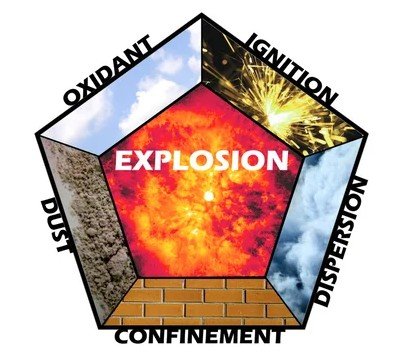
These incidents occur due to a combination of:
Fuel (dust particles)
Oxygen
Ignition source
Dispersion (dust cloud)
Confinement (enclosed space)
This is often referred to as the dust explosion pentagon.
Key Requirements Under SS667
SS667 outlines a systematic approach to managing combustible dust hazards across the entire facility lifecycle.
1. Hazard Identification
Facilities must determine whether materials handled are combustible or explosible.
This may involve:
Reviewing material data
Checking Safety Data Sheets (SDS)
Conducting laboratory testing where necessary
Even if no incidents have occurred previously, risks must still be assessed.
2. Dust Hazard Analysis (DHA)
A Dust Hazard Analysis (DHA) is a core requirement.
This is a structured assessment used to:
Identify fire and explosion scenarios
Evaluate likelihood and severity
Define required control measures
The DHA must:
Be conducted by a competent person
Cover all process areas and equipment
Be documented and reviewed periodically
This is one of the most critical compliance steps under SS667.
3. Prevention and Mitigation Measures
SS667 requires both preventive and protective controls, including:
Prevention:
Elimination or control of ignition sources
Minimising dust accumulation
Proper housekeeping practices
Controlling fugitive dust emissions
Mitigation:
Explosion venting or suppression systems
Isolation of hazardous processes
Fire protection systems
The goal is not just to prevent ignition, but to limit damage if an incident occurs.
4. Equipment & System Design
The standard provides guidance on:
Dust collection systems
Ducting and conveying systems
Air-material separators
Process equipment safety
Systems must be:
Designed based on material properties
Suitable for the specific process
Integrated into overall facility safety design
5. Storage & Handling Requirements
SS667 includes requirements for:
Bulk storage of combustible materials
Handling of fine particulate waste
Packaging systems (e.g. containers, bags)
Proper storage is critical to:
Prevent dust dispersion
Reduce ignition risk
Maintain safe operating conditions
6. Safety Management & Maintenance
Beyond system design, facilities must implement:
Ongoing inspection and maintenance
Worker training and hazard awareness
Emergency response procedures
Documentation and compliance tracking
Compliance is not a one-time setup — it requires continuous management.
What This Means in Practice
SS667 is not just a guideline — it directly impacts how your facility is designed and operated.
In practice, compliance requires:
Properly engineered dust collection systems
Control of dust accumulation in ducts and equipment
Integration of explosion protection where required
Regular system inspection and maintenance
Alignment with workplace safety regulations
Most importantly, systems must be designed based on your specific material, process, and risk profile.
How This Relates to Other Standards
In Singapore, SS667 works alongside:
MOM Workplace Safety & Health (WSH) requirements
NFPA standards for detailed explosion protection design
SS667 provides the local framework, while international standards often support detailed engineering design and implementation.
Common Gaps in Industrial Facilities
In many facilities, risks arise due to:
Dust accumulation in ducting or surfaces
Inadequate extraction at source
Lack of explosion protection systems
Poor system maintenance
Absence of formal Dust Hazard Analysis
These gaps significantly increase the likelihood of incidents and non-compliance.
How we can help
We support facilities in designing and implementing systems that align with SS667 requirements, including:
Dust collection system design
Explosion protection solutions
Oil mist and fume extraction systems
System upgrades and retrofits
Maintenance and performance optimisation
Not Sure What Applies to You?
If you are unsure whether your current system meets SS667 requirements, we can help assess your setup and recommend the appropriate solution.